
ABOUT
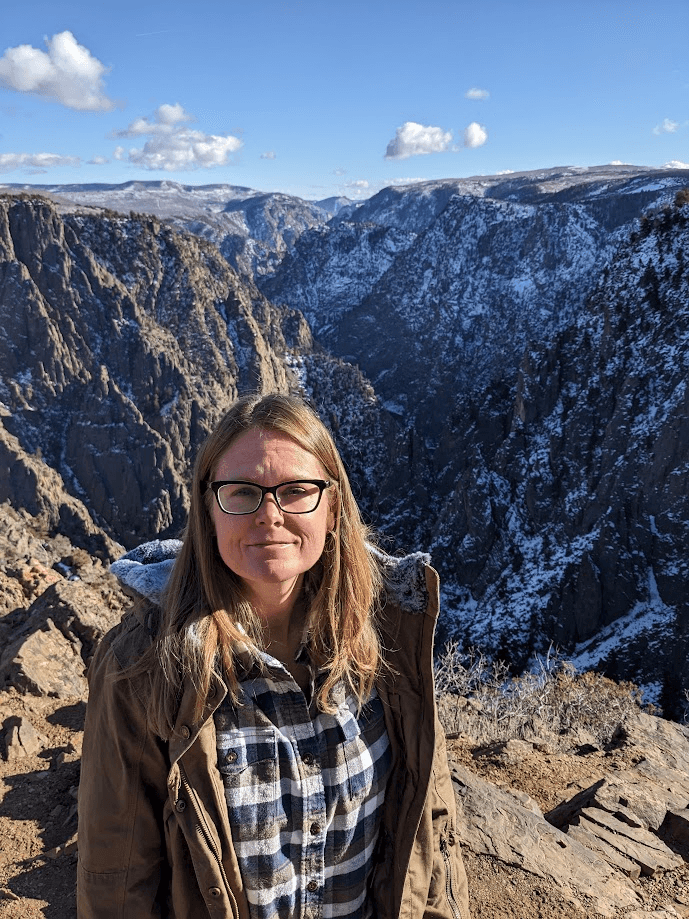
Amanda Akers, Ma, lpcc
I took a roundabout road to counseling. Before getting my degree in clinical mental health, I worked in education policy, owned a kids’ adventure camp, wrote educational materials, and spent many years as a bilingual fourth-grade teacher. I like to say this isn’t my first rodeo; I’ve just switched events. What ties it all together is a need to be useful and a serious curiosity about humans, how we’re wired, and all the unique ways we make our way through this world.
What I love about being a counselor is getting to know the whole person: the constellation of relationships, experiences, thoughts, and feelings that make each of us such a uniquely perfect response to our own lived experience. It's a true honor to sit with the varied, complex parts of a person, help them uncover their strengths, and support them as they build purposeful lives and healthier relationships, with others and themselves.
On a personal note, I'm a wife, a mom, and a hiker/runner/camper with 2 dogs, 1 cat, and 15 chickens. There was poverty, alcoholism, and dysfunction in my childhood, but my straight, white, cisgenderness has afforded me plenty of privilege. I've called the Grand Valley home for almost 5 years now after having lived in other amazing places like Russia, Mexico, Brazil, and Austin, Texas. I still love to travel whenever I'm not working, cooking, reading, or sitting by a fire watching comedy specials, The Office, or detective shows set in beautiful foreign places where they have a disturbing number of murders given the charming locale.
Licensed in the state of Colorado: 0024667
Supervised by Jessica Berry, LCSW
MY APPROACH
My work is grounded in two frameworks: Carl Rogers' person-centered approach and Dan Siegel's Interpersonal Neurobiology (IPNB). Rogers found that people heal best when they're met with unconditional positive regard, genuine empathy, and congruence. In practice, this means you won't be judged for what you bring into the room, and you'll get a real person in return.
IPNB treats mind, body, and relationships as one integrated system. When that system gets overwhelmed or dysregulated by trauma, loss, and real life, we can easily land in rigidity (stuckness, shutdown) or chaos (overwhelm, unpredictability). We'll work on finding the steadier space in between.
Because many patterns first took shape in relationships, relationships can also be healing spaces, including the therapeutic one. Expect an honest, collaborative dynamic, not a one-sided evaluation. Together, we'll build mindfulness of your thoughts, feelings, and nervous system responses, trace the roots of old patterns and identify how they still show up today, and develop regulating habits you can rely on. The goal isn’t to become a different person, but to come home to yourself as you grow more adaptive and self-aware, to move in your body and your environment like you belong here.
Clients tend to describe me as warm, funny, and genuine. I work from an intellectual but practical place. I’ll take your inner life seriously without making you feel fragile or talked down to. You’ll leave sessions feeling seen, safe, accepted, and supported.
FREQUENTLY ASKED QUESTIONS
What can I expect in a first session?
We’ll start with a free consultation, by phone or in person, so we can both get a feel for whether this is a good fit. Then, the first official session runs about an hour. It’s an intake session, so I’ll ask a lot of questions about you, your history, and what’s bringing you to therapy. There’s no pressure to have it all figured out; that’s what we’re here to do together.
How long are sessions, and how often will we meet?
Sessions are typically 45 minutes, and I usually recommend meeting weekly to start. Like almost everything in therapy, though, this is a collaborative decision. We’ll talk about what actually works for you, your schedule, and your needs. And we can adjust as we go.
Do you take insurance, and what are your fees?
I accept most insurance plans, including Medicaid. For private pay, fees are $120 for a 45-minute session and $140 for a 60-minute session. Jackrabbit Counseling never wants cost to be a barrier to care. If fees are a concern, please reach out to talk about sliding-scale options.
Do you offer in-person sessions, telehealth, or both?
Both. In-person sessions are held at 2518 Monument Road, Grand Junction, CO, 81507, and telehealth is available anywhere in Colorado. We can also take our sessions outside for a walk-and-talk on local trails.
Is therapy right for me?
You’re the person best suited to answer that, and the fact that you’re asking is usually a sign that some support could help. You don’t need to be in crisis to benefit from therapy, and reaching out doesn’t mean you’re broken. People come because they feel stuck, overwhelmed, anxious, or unsure of themselves; because they’re moving through a transition; because they’re grieving, or carrying old trauma, or moving through depression; because a relationship pattern keeps repeating; or simply because they’ve never had space to really understand themselves. The best way to find out is to try it. There’s never any obligation to continue.
How do I know if we’re a good fit?
The relationship between client and therapist is one of the most important parts of successful therapy. Research consistently shows the quality of that connection matters as much as any specific technique. You can get a sense of me, my style, and my approach during the free consultation. But it's also a great chance to see if the vibe is right. I think it's important to trust your gut. If you feel seen and heard and want to keep talking, then we can book an appointment. If anything feels off, we can talk about that and/or I can recommend someone who my be a better match for your needs.